Cohort-based · 12 weeks · Limited seats

Become an AI engineer
who ships systems, not demos.

Learn how modern AI systems are actually designed in production — not just how demos work. Twelve weeks, live mentorship, and mandatory hands-on projects.

LANGCHAIN · LANGGRAPH · RAG · FASTAPI · DOCKER · VECTOR DBs · LANGSMITH · MCP · LANGFUSE

Next cohort starts
Aug 2, 4:30 PM IST
00Days
:
00Hrs
:
00Min
:
00Sec
5,000+learners trained
200+career transitions into tech
50+countries running deployed systems
13+ yrsteaching Data Science & AI

Not ready to commit to the full cohort yet? Join a free live webinar with Sarvesh first.

Reserve a free seat →

Welcome

"This program is designed for engineers who want strong AI fundamentals and the skills to take AI applications into production as applied AI practitioners. You won't just learn tools. You'll learn to design and debug real AI systems with confidence. Welcome to Learn With Sarvesh, where learning turns into real-world AI systems."
— Sarveshwaran R, Founder, Learn With Sarvesh

Instructors

Taught by engineers who ship, not just teach.

Sarveshwaran R

Sarveshwaran R

Applied AI Practitioner · Educator · Founder
  • 13+ years in Data Science, AI, and education
  • 5,000+ learners trained across diverse backgrounds
  • Helped 200+ learners transition into IT and tech careers
  • Known for simplifying complex AI and Data Science concepts
  • Mission: make AI careers accessible to everyone
Varush H

Varush H

Senior AI Engineer · Big 4 Consulting Firm
  • 5+ years building production-grade AI solutions across FMCG, Pharma & Enterprise
  • AI systems deployed across 50+ countries · 500+ students trained
  • Expert in LLMs, RAG, Agentic AI (LangGraph), MCP, AWS & Docker
  • Helps learners move from AI theory to production-ready systems

The gap

Tutorials teach tools. This teaches judgment.

Many courses teach AI tools and step-by-step tutorials. Building real AI systems requires deeper understanding than that.

What most AI tutorials stop at

  • Following steps without knowing why hallucinations occur
  • Copying retrieval code without understanding answer quality
  • Wiring an agent without knowing how it makes decisions
  • No plan for what happens when the system fails

What AI Engineer Ready builds

  • Design AI applications from idea to deployment
  • Choose the right tools and architectures for the job
  • Evaluate and improve model responses systematically
  • Build with safety, guardrails, monitoring — and debug when it breaks

Core philosophy

"Tools change. Mental models last."
Why architectures exist
When to use the right pattern
What breaks first in real systems
How senior engineers reason

Who this is for

Is this you?

Built for

  • Software engineers, backend / full-stack developers, data engineers
  • Data scientists moving into AI Engineering
  • Professionals preparing for AI Engineer roles
  • Professionals re-entering the workforce after a career break

You should be comfortable with basic programming concepts, writing and reading code, and debugging errors.

Not for you if

  • You want to explore AI tools casually, without building systems
  • You can't commit at least 12 weeks of real time
  • You prefer watching tutorials over building projects
  • You're not interested in assignments, quizzes, and hands-on work
  • You see AI only as a casual hobby

This is a skills-first program.

Curriculum

12 weeks, four phases.

Every phase builds on the last — from engineering hygiene to multi-agent systems talking to real tools. Open a week to see what you'll learn and build.

PHASE 1 · WEEKS 1–4

Python + LangChain Fundamentals

W1Engineering Foundations
  • Python environments
  • VS Code workflows
  • Git & GitHub
  • Project folder structures
  • Debugging basics

Most AI projects fail due to poor engineering hygiene.

W2How LLMs Actually Work
  • Tokenization & embeddings
  • Transformers & attention
  • BERT vs GPT
  • Core LLM limitations

You'll stop treating LLMs as magic.

W3LangChain Basics
  • Prompt templates
  • Chains
  • LCEL workflows
  • Multi-step pipelines

Control the chain, control the outcome.

W4Memory, Tools & Agents
  • Memory types
  • Tool creation
  • ReAct vs function calling
  • First agent builds & routing logic

Agents amplify design decisions — good or bad.

PHASE 2 · WEEKS 5–6

RAG Foundations + Evaluation

W5RAG Fundamentals
  • Chunking pipelines
  • Embedding workflows
  • Vector database integrations
  • Retrieval chains

Retrieval quality decides answer quality.

W6RAG Optimization, LLM Evaluation & LangSmith
  • Precision & recall for retrieval
  • Context relevance scoring
  • LLM-as-a-judge
  • Hallucination detection
  • LangSmith tracing

If you can't evaluate it, you can't trust it.

PHASE 3 · WEEKS 7–8

Production RAG Project

W7Project 1, Part 1 — Production-Grade RAG System
  • Enterprise document ingestion
  • Chunking strategies
  • Embedding selection
  • Vector DB choices

Production begins where tutorials end.

W8Project 1, Part 2 — Vector DB Specialization + Optimization
  • Top-k selection
  • Re-ranking
  • Cost vs performance trade-offs
  • Cloud vector DB usage (Pinecone)

Optimization is what separates demos from products.

PHASE 4 · WEEKS 9–12

Multi-Agent Systems + MCP

W9LangGraph Foundations
  • Why LangGraph, beyond chains and AgentExecutor
  • Nodes, edges, and shared state
  • Designing workflow state
  • Debugging graph execution
  • LangGraph vs traditional agent workflows

Hands-on: a mini LangGraph workflow — User Query → Retrieval → Answer Generation.

W10Multi-Agent Systems (LangGraph)
  • Multi-agent architectures
  • Supervisor agent for task routing
  • Designing specialist agents
  • Conditional routing & shared state

Hands-on: a Supervisor → Specialist → Writer agent workflow.

W11MCP & External Tool Systems
  • Introduction to MCP
  • MCP architecture: Host, Client, Server
  • Connecting AI models to external tools
  • Integrating APIs and external services
  • Using MCP tools within AI agents

Hands-on: build a simple MCP server and connect it to a model.

W12Agents + MCP
  • MCP — "USB-C" for AI
  • MCP architecture: hosts, clients & servers
  • Building an MCP server with FastMCP
  • Connecting agents with GitHub & Slack MCP

Capstone: an MCP-powered AI agent that connects to external tools, retrieves real-world data, and automates tasks across systems.

Format

Mentorship, not passive learning.

Weekly live session

3 hours, live, every week — concept sessions for foundations, project-build sessions during project weeks, with live focus on debugging, design review, and Q&A.

Doubt-clearing & guest lectures

Every alternate Saturday, dedicated to doubt-clearing or a guest lecture from a practicing AI engineer.

Recorded learning

Structured, reusable, deep content you can revisit anytime.

Hands-on projects

Mandatory and production-oriented — not optional extras.

Assignments & quizzes

Reinforce every module so concepts stick beyond the live session.

Certificate of completion

Awarded for finishing the hands-on work — not just watching videos.

Included

What's in the program

Pre-recorded core concepts
Recorded video lessons
Notes
Assignments & quizzes
Mandatory projects
Guest lectures
Doubt-clearing sessions
Weekly live cohorts
Certificate of completion

Bonus inclusions

The complete package

Everything you get when you enroll in the AI Engineer Ready Program — beyond the 12-week core curriculum.

Python for AI Foundations

Basics · 6 hrs · Beginner friendly. Master Python from scratch for AI, Data Science & projects.

Python for Intermediate

8 hrs · Intermediate level. Build on your Python skills with advanced concepts, projects & real-world applications.

12-Week LangChain Crash Course

Live session · 24 hrs. Build real-world AI projects with mentorship from Sarvesh.

Previous cohort recordings & materials

Recordings, slides, resources, and assignments from past cohorts.

Stack

The tools you'll actually use

This mirrors real industry usage — the same stack applied AI teams build with.

Python
LangChain
LangGraph
RAG
FAISS
Chroma
Pinecone
FastAPI
Docker
LangSmith
MCP
LangFuse

What you'll build

Real AI systems, not toy demos.

Real AI engineers are defined by the systems they build.

Production-grade RAG system
Multi-agent AI workflow
AI tool built on MCP
Deployable AI API with FastAPI
AI evaluation pipeline

Career outcomes

Roles this prepares you for

Prompt engineering alone is not enough — real value comes from building AI systems.

AI Engineer
Applied AI Engineer
Agent Engineer
LLM Engineer (Applied)
Backend Engineer (AI Systems)

Certificate

Why this certification matters

This certificate is right for you if you want to:

Demonstrate system-level AI understanding
Show hands-on experience with RAG and agentic architectures
Prove you've worked through real failure scenarios
Speak confidently about design decisions in interviews
Stand out for depth, not hype
This certificate reflects effort, thinking, and engineering discipline — not just course completion. Its value comes from the work behind it.

Complete the cohort — including its mandatory hands-on projects — and earn an official Certificate of Completion from Learn With Sarvesh.

Proof

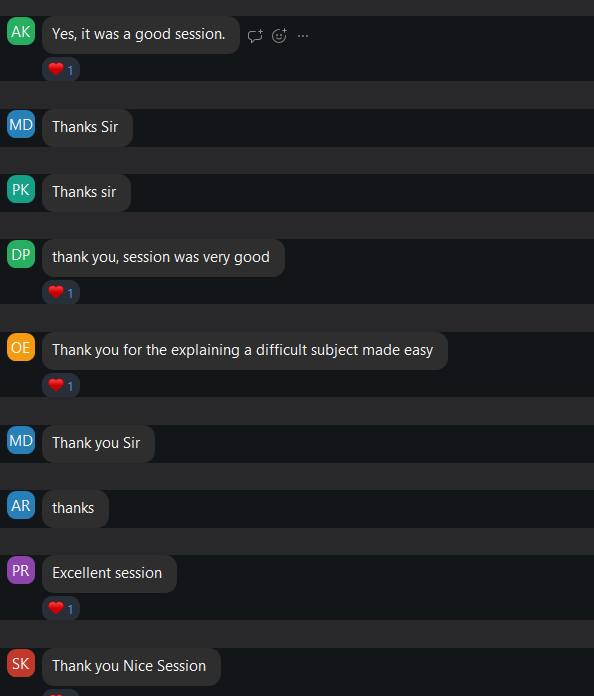
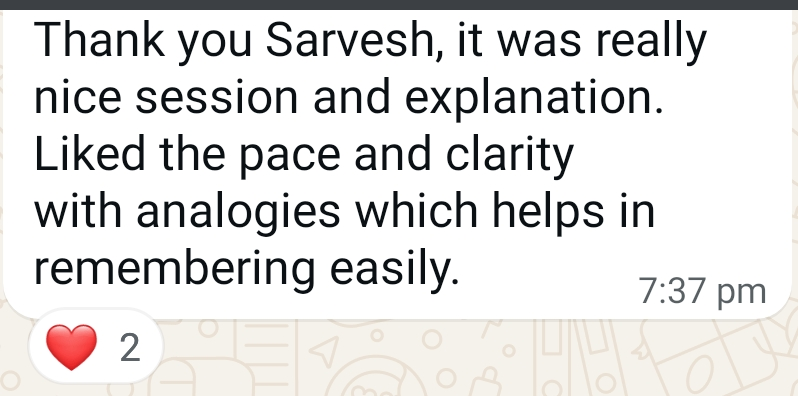
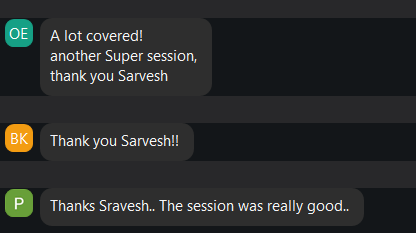
What learners say

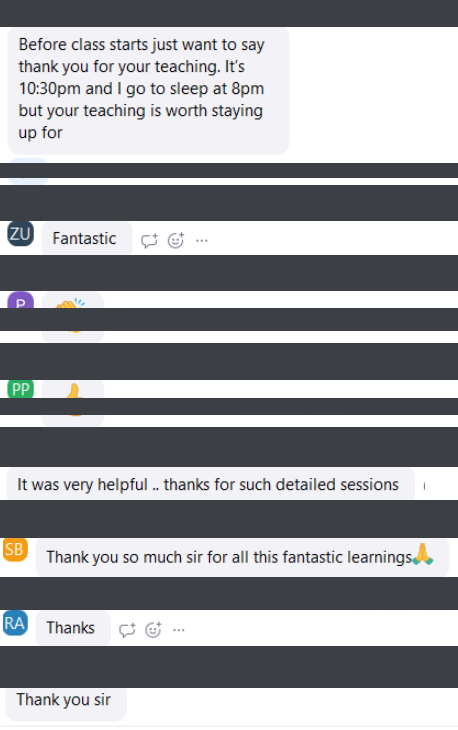
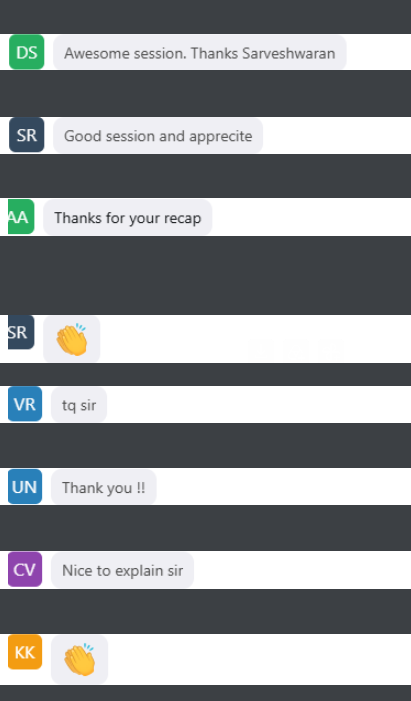
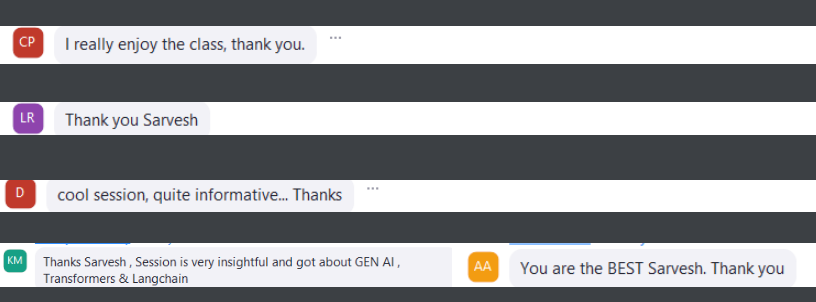
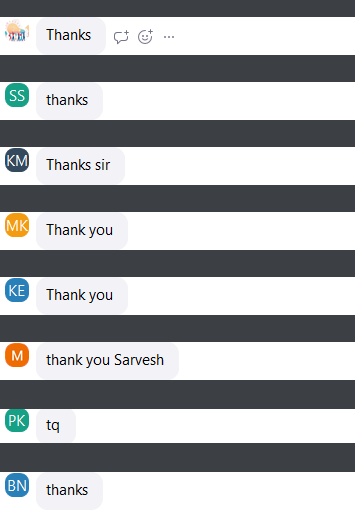
"Before this cohort, I thought AI was just prompting models. Now I design complete AI systems where memory, tools, and retrieval work together to build real-world applications."

Bala SatishStaff Engineer · via LinkedIn

"Earlier AI felt like magic. Now I understand how LLM systems work and I can build RAG pipelines and agent workflows with confidence."

Ane Kiran TejaSoftware Engineer · via LinkedIn

"This cohort gave me the confidence to build AI systems independently. Building AI agent tools and multi-client server workflows was the most exciting part."

Soma SekharSoftware Engineer · via LinkedIn

"The course provided practical insights into how AI can be applied in real-world scenarios. The AI Agents module was my favourite."

Srinivas ManianCloud Architect · via LinkedIn

"This cohort shifted my focus from just models to the importance of retrieval and context. Multi-agent orchestration showed how AI systems collaborate to solve complex tasks."

Bala PanathulaSAP Lead · via LinkedIn

"This cohort helped me clearly understand how modern AI systems work. The hands-on projects made it easier to learn how LLMs, RAG, and AI agents can be applied to real-world problems."

Parvath SejalaSenior Software Engineer, Java Full Stack · via LinkedIn

"The course provided a clear and practical understanding of building AI systems. Learning how to connect prompts, tools, and retrieval pipelines was extremely valuable."

Kiran KanneAI Engineer & Generalist · via LinkedIn

"This cohort gave me strong exposure to agentic AI concepts and modern LLM frameworks. The structured modules and projects helped me build confidence in developing AI applications."

Sasikumar VSoftware Senior Engineer · via LinkedIn

"This program helped me build real-world AI applications like resume analyzers, chatbots, and document summarizers using LangChain and RAG pipelines."

Aparna PaulTechnical Lead, Data & Analytics · via LinkedIn

"This program provided both strong theoretical understanding and hands-on experience through real projects. Learning RAG systems and agent orchestration significantly improved my confidence."

Balasubramanyam MoturuSr. Tech Project Manager · via LinkedIn

"This cohort helped me transition from traditional programming into AI development. I now understand how to design intelligent AI agents that can reason, use tools, and solve complex problems."

Faozia Mohiuddinvia LinkedIn

"I learned how modern AI systems work using LLMs, RAG, LangChain, MCP, and LangGraph. The LangGraph module helped me understand how AI workflows plan, execute, and validate tasks."

Usha Kommarivia LinkedIn

"This program provided both a deep understanding of AI systems and hands-on experience through industrial-level projects. Learning about LangChain and building voice agents significantly improved my confidence in developing real-world AI solutions and helped me in my current work."

Suresh Ithavia LinkedIn

In their own words

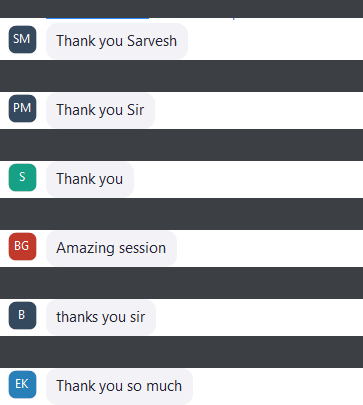
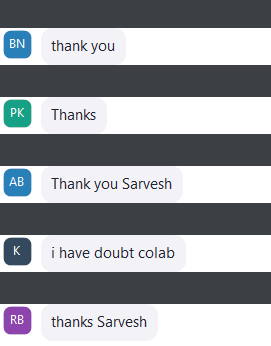
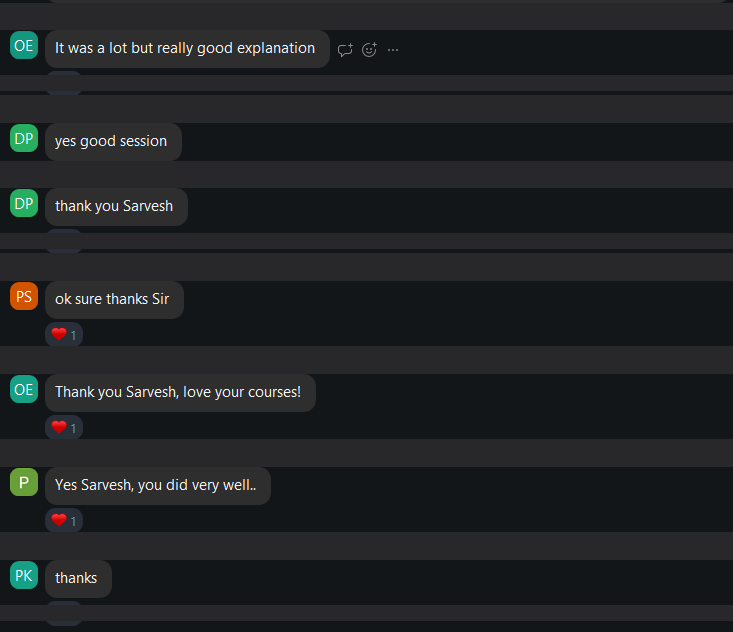
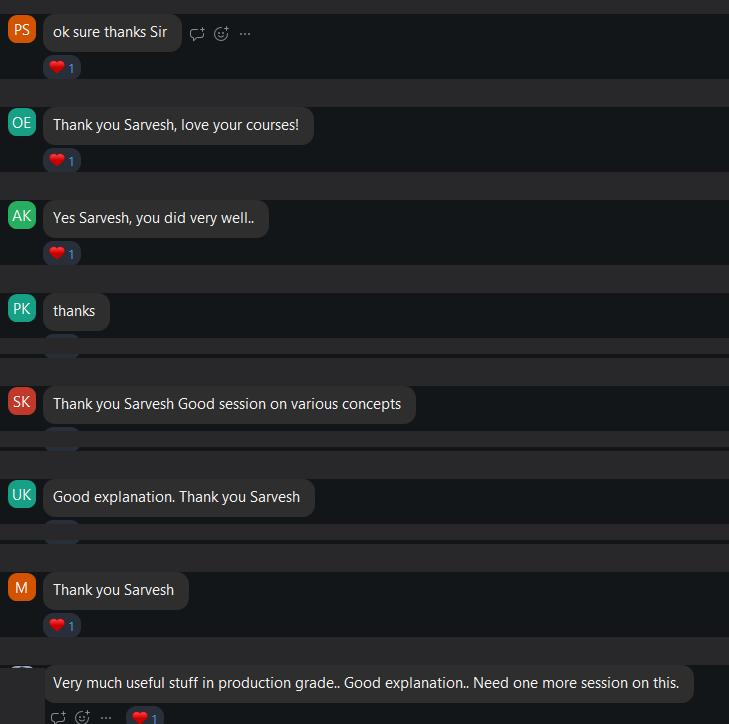
Video testimonials

Enrollment details

The program, at a glance

Program
12-Week AI Engineer Ready Program
Next cohort
Starts Sunday, August 2, 4:30 PM IST
Duration
12 weeks
Format
Structured recorded modules + weekly live mentorship + hands-on production projects
Live mentorship
3 hours every week, plus doubt-clearing or a guest lecture every alternate Saturday
Certification
Official Certificate of Completion
Seats
Limited — cohort-based
Note
Learners will need to purchase their own OpenAI API key for hands-on projects.

Register now

Take the next step toward an AI engineering career.

Build real AI systems and develop the engineering mindset required to deploy production-ready AI applications.

FAQ

Questions, answered

Do I need prior experience?
You should be comfortable with basic programming concepts, writing and reading code, and debugging errors. The program is built for software engineers, backend/full-stack developers, data engineers, data scientists moving into AI, and professionals returning to work after a career break.
Is it live or self-paced?
Both. You get structured recorded modules for core concepts, plus a 3-hour live session every week — concept sessions for foundations, project-build sessions during project weeks — and, every alternate Saturday, a dedicated doubt-clearing or guest-lecture session.
What will I actually build?
A production-grade RAG system, a multi-agent AI workflow, an AI tool built on MCP, a deployable AI API with FastAPI, and an AI evaluation pipeline — mandatory, production-oriented projects, not toy demos.
Do I need to pay for anything besides the program?
Yes — you'll need to purchase your own OpenAI API key to complete the hands-on projects.
Do I get a certificate?
Yes — an official Certificate of Completion, earned by finishing the cohort's hands-on work and projects, not just watching videos.
How do I enroll?
Enroll directly with secure Razorpay checkout, or reach out on WhatsApp at +91 99655 88321 or email admissions@learnwithsarvesh.com with questions first — seats are limited and cohort-based.